Early Signs of Wood-Destroying Organisms
Learning the early signs of wood-destroying organisms helps you act before visible damage spreads. A homeowner can notice useful clues, but a single hole or stain does not always indicate an active problem. A Wood Destroying Organism inspection can help determine whether evidence is current, old, or caused by another issue.
What Does WDO Mean?
WDO refers to pests and fungi that weaken wood. Common examples include termites, carpenter ants, powderpost beetles, other wood-boring beetles, and wood decay fungi.
These threats affect homes in different ways. Termites consume material found in wood. Carpenter ants remove wood to create nests, but do not eat it. Beetle larvae tunnel through lumber as they develop. Fungi break down wood when conditions remain damp.
A professional home inspector can document visible concerns and recommend further review by a properly licensed pest control provider when needed.
Early Warning Clues Around the Home
The first signs of wood-destroying organisms can be small and easy to dismiss. Pay attention when evidence appears suddenly or returns after cleaning.
- Mud tubes on walls or foundations: Subterranean termites use narrow soil tubes to travel between the ground and a food source. Check foundation walls, crawl spaces, garages, and areas where pipes enter the home. A broken tube does not prove activity has ended.
- Loose wings near windows and doors: Winged termites may gather near lights during a swarm. Their wings can collect in small piles afterward. Winged ants can look similar, so identification matters.
- Fine powder beneath wood: Powderpost beetles can leave a flour-like material under trim, furniture, flooring, or framing. Powder that returns after cleaning may suggest recent activity.
- Tiny round exit holes: Adult beetles leave through small openings after developing inside wood. Avoid filling, sanding, or painting the area before an evaluation, as the pattern may aid identification.
- Weak or hollow-sounding wood: Damaged trim may sound different when tapped gently. It may also look blistered, thin, or papery. Avoid pressing hard because weakened material can break.
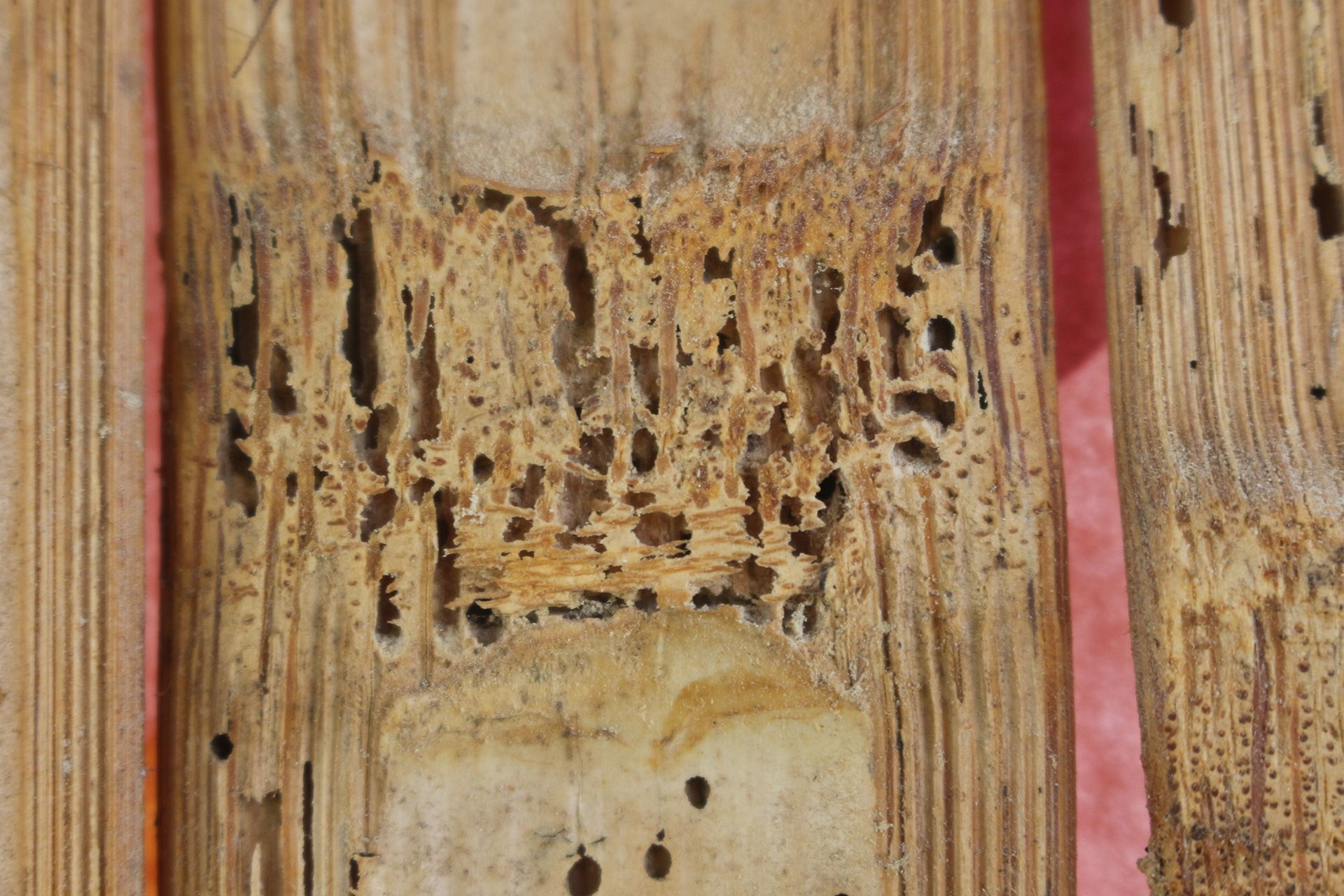
- Tunnels inside damaged material: Carpenter ants usually create smooth galleries. Termite tunnels may contain soil or debris. These channels may become visible during repairs or when damaged flooring or trim is removed.
Wood-destroying insects can remain in concealed spaces that homeowners cannot see. Arrange a WDO inspection when several clues appear together, or fresh evidence keeps returning.
Changes That May Suggest Hidden Damage
Damage may first appear as a change in the home. Flooring can feel soft or lumpy. Baseboards may separate from walls, doors may stick, and paint may bubble where moisture remains trapped.
These changes do not prove wood-destroying organisms are present. Leaks, humidity, foundation movement, and installation defects can create similar symptoms, so treatment should not be based on appearance alone.
Places That Need Closer Attention
Wood pests are more likely to stay hidden in areas with moisture, shelter, or easy access.
- Crawl spaces and foundation edges: Look for damp soil, leaks, mud tubes, damaged supports, and wood touching the ground.
- Attics and roof openings: Watch for roof stains, softened wood, damaged vents, and moisture near openings.
- Decks and exterior wood: Check posts, steps, railings, siding, and wood near soil. Cracked paint can allow moisture to enter.
- Rooms with plumbing: Inspect around toilets, supply lines, water heaters, and appliances. Slow leaks can damage subfloors and framing.
A professional home inspector may also identify risk conditions such as poor drainage, blocked ventilation, untreated wood, or stored materials placed against the structure.
Why Moisture Raises the Risk
Many wood-destroying organisms benefit from damp conditions. Moisture can soften wood, support fungal decay, and make certain areas more attractive to insects. Common sources include roof leaks, plumbing defects, clogged gutters, condensation, and water collecting near the foundation.
Correct moisture problems even when insects are not visible. Keep gutters clear, direct downspouts away from the home, repair leaks, and improve airflow in enclosed spaces. Store firewood, cardboard, and scrap lumber away from exterior walls.
What to Do When You Find Evidence
Do not remove or spray suspicious evidence right away. Clear records can help a qualified provider assess it.
- Take photographs: Capture close details and wider views that show the location. Add a ruler or common object for scale when recording holes, wings, tubes, or powder.
- Protect the clues: Avoid scraping tubes, applying chemicals, or replacing wood before review. Disturbing the area can make identification harder.
- Check for moisture: Look for leaks, stains, damp soil, or drainage problems. Stop urgent water entry when needed, but document the original condition first when it is safe.
- Request an evaluation: Schedule a WDO inspection when evidence is fresh, appears in multiple locations, affects structural wood, or recurs after cleaning.
The report should describe visible evidence, affected areas, access limits, and conditions that may support future activity. A licensed pest control provider should recommend treatment when an active infestation requires correction.
Why Detection Matters During a Home Sale
Buyers need a clear understanding of the property before closing. Sellers benefit from finding concerns before repair discussions begin. Damage related to wood-destroying organisms may affect repair planning, lender requirements, and buyer confidence.
A WDO inspection focuses on visible evidence, related damage, and conditions that may support activity. It does not replace a complete home inspection, which covers many other systems. Depending on the transaction, a buyer may need both services.
Sellers can also request an evaluation before listing. Early information gives them time to seek guidance, complete appropriate work, and organize repair records.
When Professional Review Is Important
Seek help when you find fresh mud tubes, recurring powder, discarded wings, damaged structural wood, or several warning signs in one area. You should also request a review after long-term leaks, flooding, or repairs that expose tunnels.
A professional home inspector can identify visible concerns during a broader property review, but walls, flooring, insulation, and stored belongings may limit access.
Conclusion
Early detection starts with noticing small changes. Mud tubes, wings, powder, holes, weak wood, and moisture problems can all signal a need for closer review. Since water damage and normal building movement can create similar clues, proper identification is important.
Full Circle Home Inspectors helps Central Florida buyers, sellers, and homeowners understand visible concerns through careful inspections and clear reports. Our team can identify conditions associated with wood-destroying organisms and explain when additional pest-control guidance may be needed.
Choose Full Circle Home Inspectors for experienced WDO inspections backed by local knowledge of Central Florida’s climate, soil, and construction methods. Our detailed reports include clear photos, easy-to-understand findings, and practical recommendations for your next steps.
Trusted by realtors and homeowners alike, our team takes the time to address every concern and answer your questions. Schedule your inspection with us today.
FAQs
Are termites the only pests included in the WDO category?
No. Wood-destroying organisms may include termites, carpenter ants, powderpost beetles, other wood-boring beetles, and fungi that decay wood.
Does every small hole mean an infestation is active?
No. Holes may be old or unrelated to pests. Fresh powder, new openings, or evidence that returns after cleaning should be evaluated.
Can paint hide damage from wood-destroying insects?
Yes. Paint may cover holes or stains while damage remains inside the material. Inspectors also consider moisture and nearby evidence.
Should I remove mud tubes before an inspector arrives?
Leave them in place when possible. Their location and condition may help with identification. Photograph the area and avoid spraying it.
Can a WDO inspection find activity behind every wall?
No. It covers visible and accessible areas. Finished walls, flooring, insulation, and stored items can hide evidence.
Disclaimer: The information on this website and blog is for general informational purposes only and is not professional advice. We make no guarantees of accuracy or completeness. We disclaim all liability for errors, omissions, or reliance on this content. Always consult a qualified professional for specific guidance.
Search
Recent Posts